In this first Newsflash of the year, we are excited to share highlights from the EAN Board in-person meeting in January, an interview with members of the Coordinated Action for Research on European Scabies, and the first review in our new EAN Book Recommendations Series. We would also like to continue introducing one of our newest external members and give Laura a warm welcome!
We sincerely thank EAN members Ewout, Laura, Soledad, and Ziad for contributing to the content of this Newsflash.
Previous editions of the newsflash are now also available on our new website.
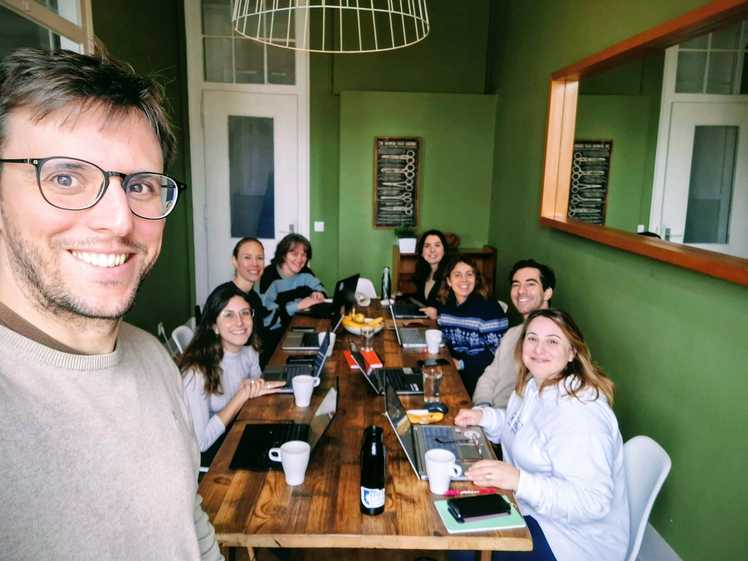
The EAN Board met in Lisbon in January for its annual face-to-face meeting to discuss priorities and plan activities for the coming year.
Discussions focused on expanding training opportunities for active members, both online and in person; exploring ways to strengthen alumni networking and connections; and consolidating ongoing activities. We brainstormed on new activities and discussed the current and potential links with European fellowship programmes and their fellows.
The Board also considered how to further develop collaborations with other professional networks and associations, and discussed EAN’s role in European public health conferences such as ESCMID Global and ESCAIDE.
The meeting helped align priorities and set the direction for several activities that will be developed in the coming months.
Stay tuned!
World Neglected Tropical Diseases Day
Interview with members of the Coordinated Action for Research on European Scabies (CARES)
The World Neglected Tropical Diseases Day is observed annually on January 30 to raise awareness of 21 often debilitating, yet preventable, diseases. One of these diseases is scabies. To highlight European efforts in this area, we interviewed Soledad Colombe and Ewout Fanoy, who have supported the launch of the Coordinated Action for Research on European Scabies (CARES).
How did the idea for the European scabies network come about? Did existing networks, such as EAN, play a role in building the initial connections?
Soledad: EAN played a massive role in building the network! Early 2022, the team I work in at ITM received calls from clinicians in Belgium asking if there was possibly a growing resistance of scabies mites to permethrin. They were indeed under the impression to be getting more "difficult to treat" cases. When discussing the issue with my colleagues, we realized it would be good to get a broader picture of the epidemiology of scabies in Belgium first. Of course, I said "that's a perfect EPIET project!", and I reached out to Valeska Laisnez, EPIET fellow at Sciensano at the time. She herself had contacts at RIVM working on scabies and conducting a case-control study to better understand scabies treatment failure. And little by little the Belgian- Dutch group grew, Ewout Fanoy, EPIET-alumni, also joined the calls then involved in scabies outbreaks and research for years. There had been some publications on the increase in scabies cases in Germany and Norway too. We reached out to our EPIET/EUPHEM cohort colleagues. We had several years of informal meetings, updating each other on scabies diagnostic tools, pharmaceutical tips and tricks (how to make Benzyl Benzoate burn less!), and comparing guidelines for environmental decontamination. The network kept growing, other European experts were joining. And last year (2025) we decided to make the network more formal by applying for funding (we'll hear back in May!). There again EAN was crucial. We all reached out the network, asking people if they knew anyone working on scabies. The scabies network (called CARES - Coordinated Action for Research on European Scabies) has about 40 people all across Europe now, and we're still having informal meetings until we can get funding to build projects together.
What makes scabies an issue that would benefit from stronger coordination at the European level? There are very few countries in which individual scabies cases are notifiable. Actually, to our knowledge, they are only notifiable in Croatia. It makes it very difficult to monitor trends over time and to understand why we've been seeing a large increase in scabies in the past ~15 years. It also makes it difficult to know whether interventions are having any effect. Scabies is a typical example of a neglected disease. A lot of the basic knowledge comes from the 40s and 70s and we still use this basic knowledge to create our guidelines. Diagnostic at primary care (GP) level is also very difficult. And it is still a highly stigmatized disease, despite affecting really everyone in our societies. Through stronger coordination in Europe, we can learn from each other's expertise on proxy data that can be used for monitoring, we can compare guidelines and understand why one decision or another was made based on expert input, and we can make a stronger case of the need for public health attention to scabies.
What are the plans for the network moving forward? As mentioned earlier, we have applied for funding to formalize the network. This will help fund exchange programs between institutions with various expertise on scabies in Europe. It will also allow us to meet in person more often. I think we all know that makes collaboration easier! In the meantime, we are already setting up the governance of the network and creating work packages so that it gets easier for people to get involved.
How can people get involved with the network if they want to?
People are more that welcome to get involved. They can reach out to anyone they know in the scabies network, or to one of us and we will put them in touch with the rest of the network. Hopefully we get a website set-up soon so it gets easier to reach out to us!
Soledad Colombeis an EPIET alumni, Cohort 2018, EU track in Sweden. She has been working as an epidemiologist at the Institute of Tropical Medicine (ITM), Antwerp, Belgium, since September 2020. She was a member of the outbreak research team of ITM when she started working on the topic of scabies in Belgium.
Ewout Fanoy is also an EPIET-alumni, Cohort 2013, member state track in the Netherlands. He has worked as a medical doctor specializing in infectious disease control and currently works at the Public Health Service in the Utrecht region. He is involved in wastewater and scabies-related research. In addition, he currently serves as Editor-in-Chief of the Dutch scientific journal Infectieziektenbulletin.
EAN Book Recommendations
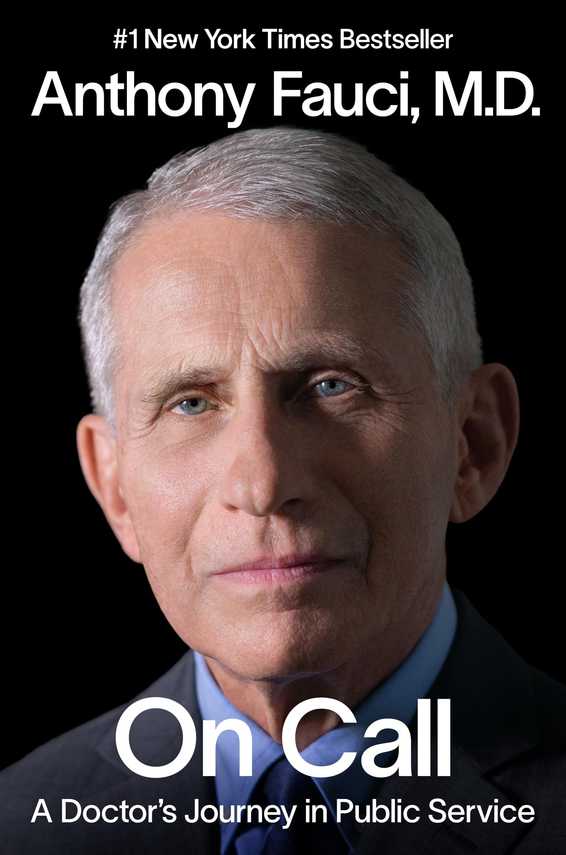
Anthony Fauci
"On Call: A Doctor's Journey in Public Service"
Recommended by Ziad El-Khatib
I recommend reading the book entitled “On call” by Dr. Anthony Fauci, former director of the National Institute of Allergy and Infectious Diseases (NIAID) from 1984 to 2022. Dr Fauci reflected on his decades of leadership in infectious diseases, including the HIV/AIDS epidemic, Ebola, SARS, West Nile, anthrax, and COVID-19. He describes how humility, scientific reasoning, and open and steady communication as an important compass for such work, specially in the times of crisis. The book goes into technical details and into insights about dialogues with communities, collaboration with policymakers, and the moral weight and importance of public trust (trust is a priceless commodity!). Fauci often shares his intention to be of service to others (inspired by his Jesuit education). This spirit reflects a harmony between science and moral responsibility. He describes the importance of grounding action in evidence, even when public opinion, fear or politics pull in other directions. A central message of the book is that public health leadership is not a “one-man show”. The betterment of public health depends on teams of researchers, clinicians, epidemiologists, laboratory scientists and public health workers. Fauci emphasizes that science advances through collaboration, peer review, collective effort, and kindness.
Ziad El-Khatib is an associate professor in global health, senior epidemiologist at the Austrian Agency for Health and Food Safety (AGES), EPIET supervisor for Austria, EPIET Scientific Coordinator. He worked in the Middle East, Sub-Saharan Africa, North America, and India in infectious diseases, non-communicable diseases (NCD), humanitarian aid (MSF), research, and capacity building.
If you want to share a book recommendation, don't hesitate to contact us by email!
Spotlight on the Network
Introducing Laura Goddard
Greetings from Lyon, France!
My name is Laura Goddard and I am an alumni of the Australian FETP. My background is in nursing and public health and my interests in zoonotic diseases, pandemic prevention, preparedness and response, and the One Health concept, have recently led me to start a position as an epidemiologist with the French Plateforme d’Épidémiosurveillance en Santé Animale (Plateforme ESA). The Platform plays an important role in event-based surveillance of international animal health events as well as bringing together experts and working groups to design, implement and evaluate animal health surveillance systems in France.
I learnt about the EAN at the 2025 ESCAIDE conference and am excited to join as an external member. As a relatively new arrival to Europe, I particularly appreciate the opportunities that the EAN offers as a way to meet other passionate epidemiologists as well as to participate in professional development and other activities.
Be part of the community: ways to stay involved and connected!
Do what you love to do!
You'd like to get active on a project for our community? An experience you'd like to share or a topic you'd like to educate on? Please reach out to us at [email protected] if you'd like to discuss your idea and want our support. We are available to help you bringing your ideas come to life.
Support us with (small) tasks
Our community lives from all of us and the capacities of the volunteer board alone are limited. Every now and then, we may reach out to ask for your help on specific tasks or activities to get the best out of it for all of us. Of course, feel free to reach out proactively to see how you can help.
Activate your membership
Many benefits are lined up for active members of the network (GOARN requests of assistance, bulletins, discounts on mini-modules, access to specific ressources on our website...). You can activate your membership at anytime! The annual membership fee is now €40. There is a 5-year membership available at €180. Fellows in their first and second year of training are exempt from paying membership fees.
To activate or renew your membership, you can log in on the website. Open your profile and click on the button "Contribute now" and follow the steps. Alternatively, you can transfer the membership fee to the following Qonto account. Please indicate your name and membership year as reference in the bank transfer and also send an email to [email protected] with a copy of the receipt/invoice to inform us about your payment (sometimes names are not correctly transmitted with the transfer).
Account Holder: E.A.N. (EUROPEAN PROGRAMME FOR INTERVENTION EPIDEMIOLOGY TRAINING ALUMNI NETWORK)
IBAN: FR76 1695 8000 0194 6262 7758 670
BIC/Swift code: QNTOFRP1XXX
Intermediary bank's BIC/SWIFT: TRWIBEB3XXX
Bank address: 14 RUE DU VAL D'OSNE, 94415 SAINT-MAURICE CEDEX, FR
If you require any further information on membership payment, we kindly ask you to contact us by email. Thank you for your support!